
For years, teams have sparred against traditional analytics tools to deliver insights. Delays and friction in these tools led to frictions between analytics teams and the rest of the business, often sidelining data-driven insights for the sake of speed of execution.
Thankfully change has arrived in the form of agentic analytics; a new family of analytics capabilities that delegate repetitive, time-consuming tasks to specialised AI agents while helping analysts deliver advanced use-cases like predictive modelling faster and better than before.
In this post I'll explore 6 agentic analytics capabilities we've developed to transform our customers analytics teams from a service desk into a core strategic pillar of their organisations. For each capability, I'll demonstrate how we've implemented it within TrueState and contrast it with the traditional approach.
1. Automated Data Profiling and Documentation
In a traditional analytics setup, some poor soul has to manually document every table, column, and business rule to maintain proper data documentation. Data governance becomes a chore that nobody wants to own, and stale documentation leads to repeated mistakes and duplicated effort.
This results in new team members spending weeks learning where data lives and what it means. Analysts waste hours figuring out which fields to trust.
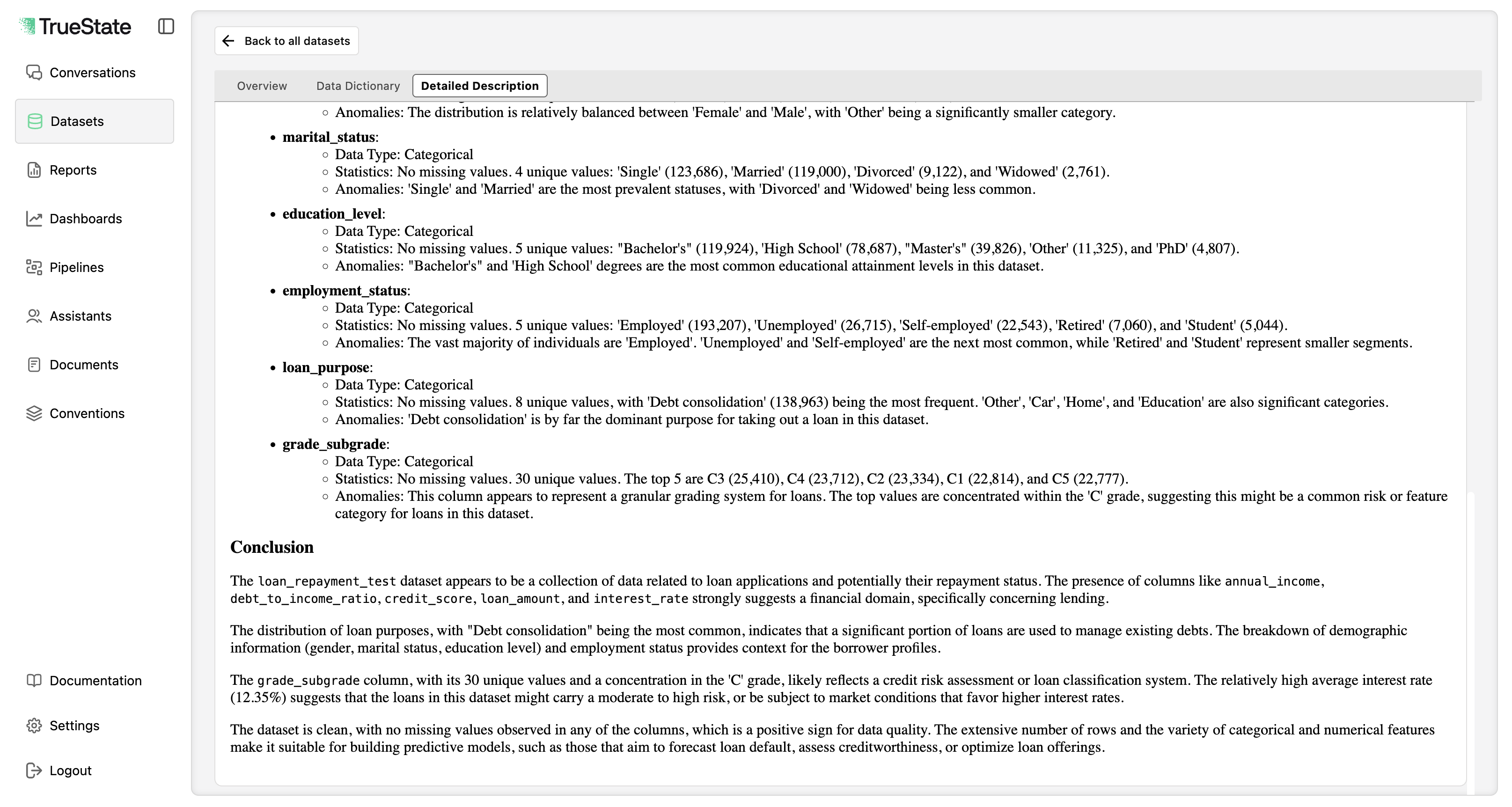
One of the cornerstones of agentic analytics is automatically documenting your data. Agents take organisational context provided by analysts and a basic level of source system documentation (e.g. "this data comes from our meta ads") and uses this to guide extensive profiling of the datasets.
Commentary is then overlaid to create rich documentation for each dataset.
Interestingly, the impact of data profiling and documentation isn't direct, it's an enabler of other agentic analytics capabilities, improving overall system performance.
2. Intelligent Data Discovery
Traditional platforms require extensive onboarding. Users need to learn the data model, understand where different metrics live, and remember which tables join to what. Even with an LLM bolted onto a legacy platform, users still need to know what to ask for and where data exists.
This creates institutional knowledge silos and means valuable datasets go underutilsed simply because people don't know they exist.
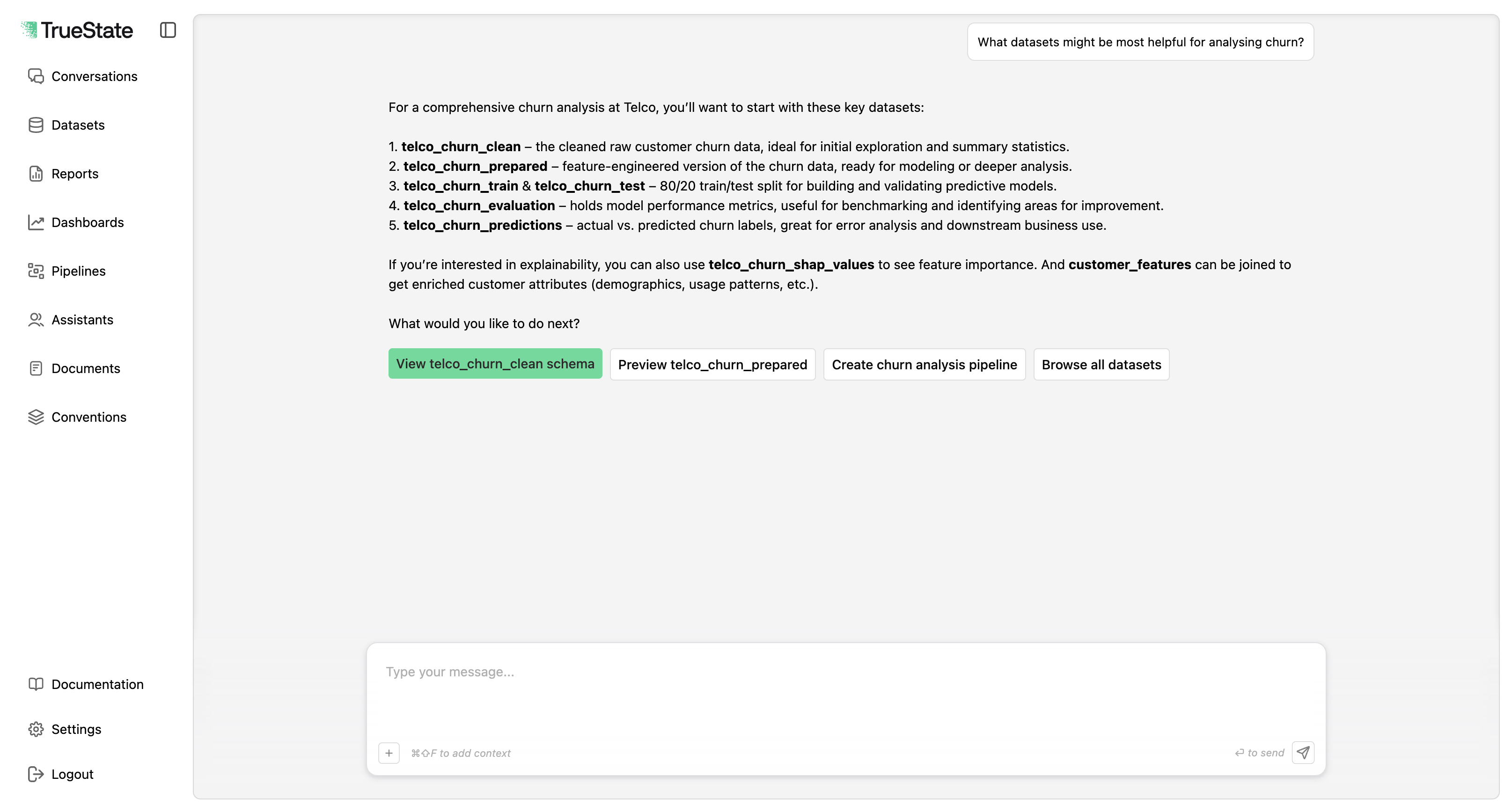
In agentic analytics, users don't need to maintain mental maps the data landscape. They ask questions about customers, revenue, or operations, and analytics agents find the relevant data automatically.
When combined with automated profiling, intelligent discovery smooths the user experience and cuts time to insights for analyts and end-users alike because they can find the right data faster. This means minimised onboarding friction for new users and increased utilisation of all data.
3. Conversational Analytics: Delegating "quick questions"
Many analytics teams spend a majority of their time responding to ad-hoc analytics requests from the business (AKA "quick questions"). This is because business users lack both technical capability to write SQL queries and an understanding of the underlying data.
This creats bottlenecks and is one of the core reasons analytics teams operate as service desks in many companies.
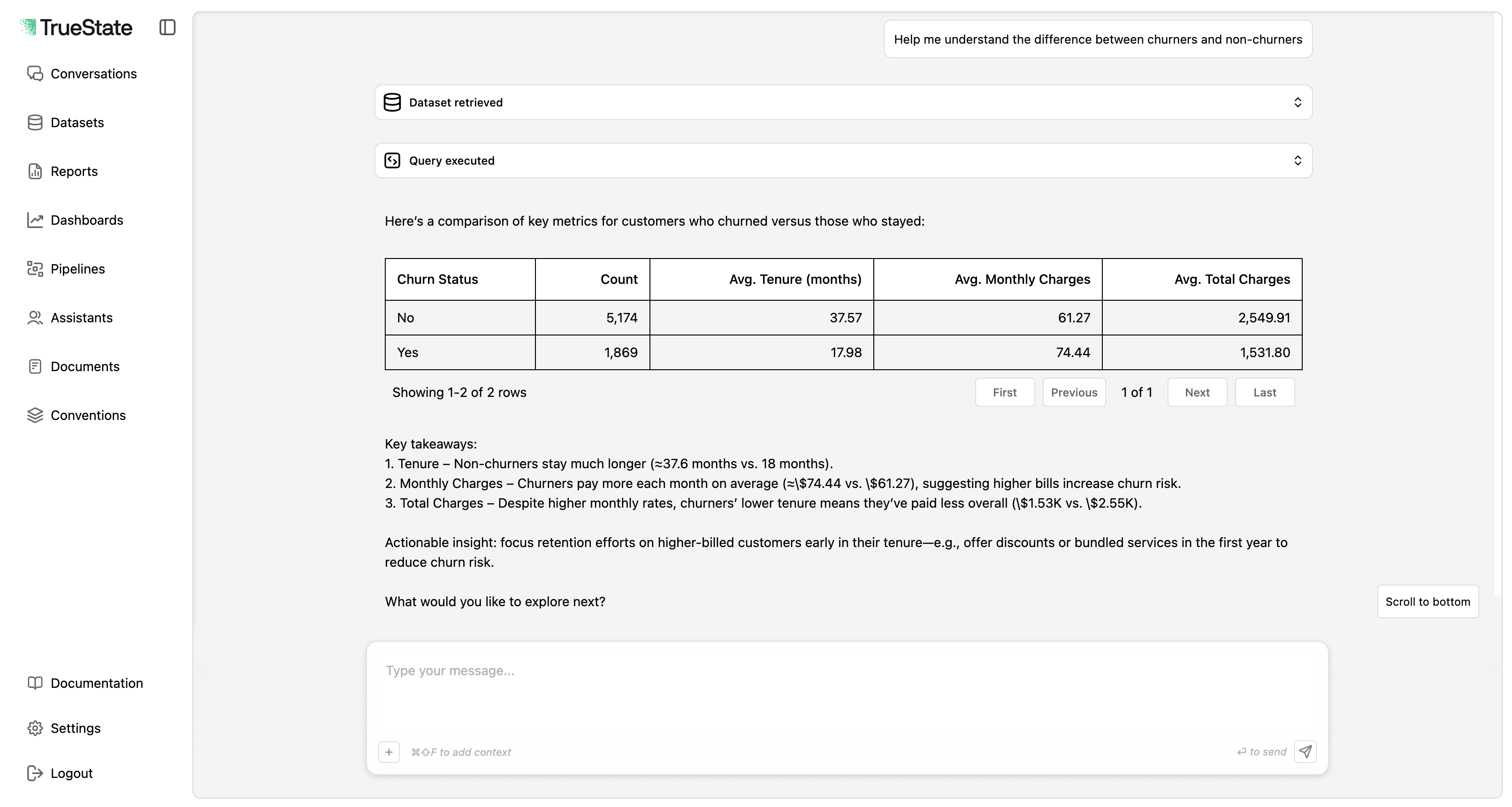
With agentic analytics, non-technical business users are able to ask operational questions in plain English and get instant, informed and best-practice answers.
This frees up immense capacity for analytics teams, allowing them to focus on high-value, long-term strategic initiatives. When operating over up-to-date documentation and data discovery features, conversational analytics sees a step change in reliability and transforms from a hackathon party trick to fundamental capability of a modern analytics team.
4. Automated Regular Reporting
Analytics teams spend countless hours every week on recurring reports. Weekly sales summaries, monthly performance reviews, and executive dashboards all require manual work: pulling data, checking for anomalies, writing commentary, and sending updates.
This work is necessary but soul-crushing. It keeps analysts trapped in a cycle of reactive reporting instead of strategic problem-solving.
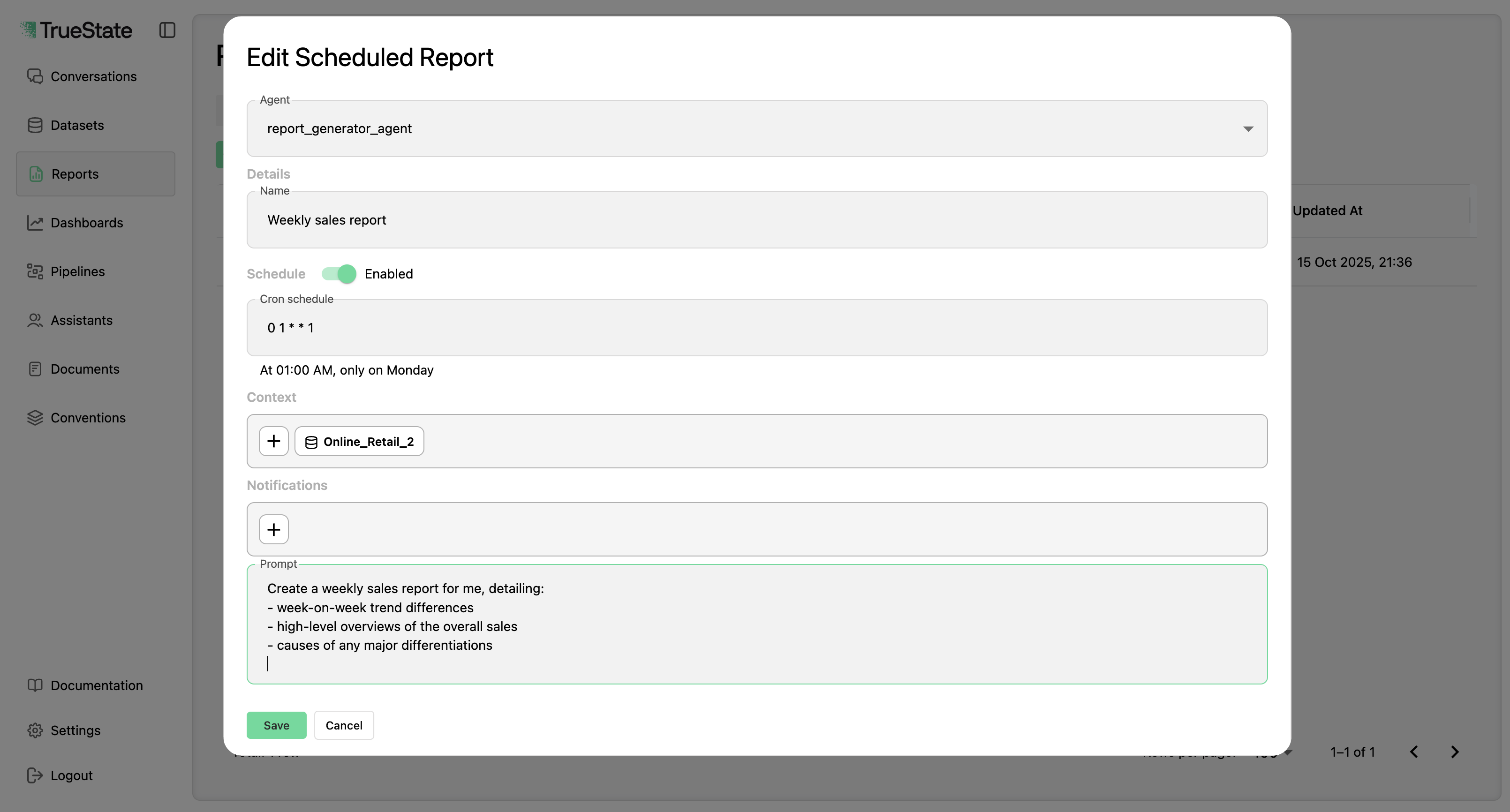
Regular reporting is a core value lever of agentic analytics, with agents crafting nuanced analysis on schedule. For many teams, automating regular reporting is the biggest single value-lever for agentic analytics with some analysts reclaiming 10-15 hours per week; shifting from reactive reporting to proactive problem-solving.
5. Accelerated Data Engineering
Data preparation consumes 60-80% of most analytics projects. Teams need to clean inconsistent values, join disparate sources, and handle missing data before any analysis happens. This requires engineering skills most analysts don't have, creating another bottleneck.
Analysts end up waiting on engineering sprints or hacking together fragile solutions that break when source systems change.
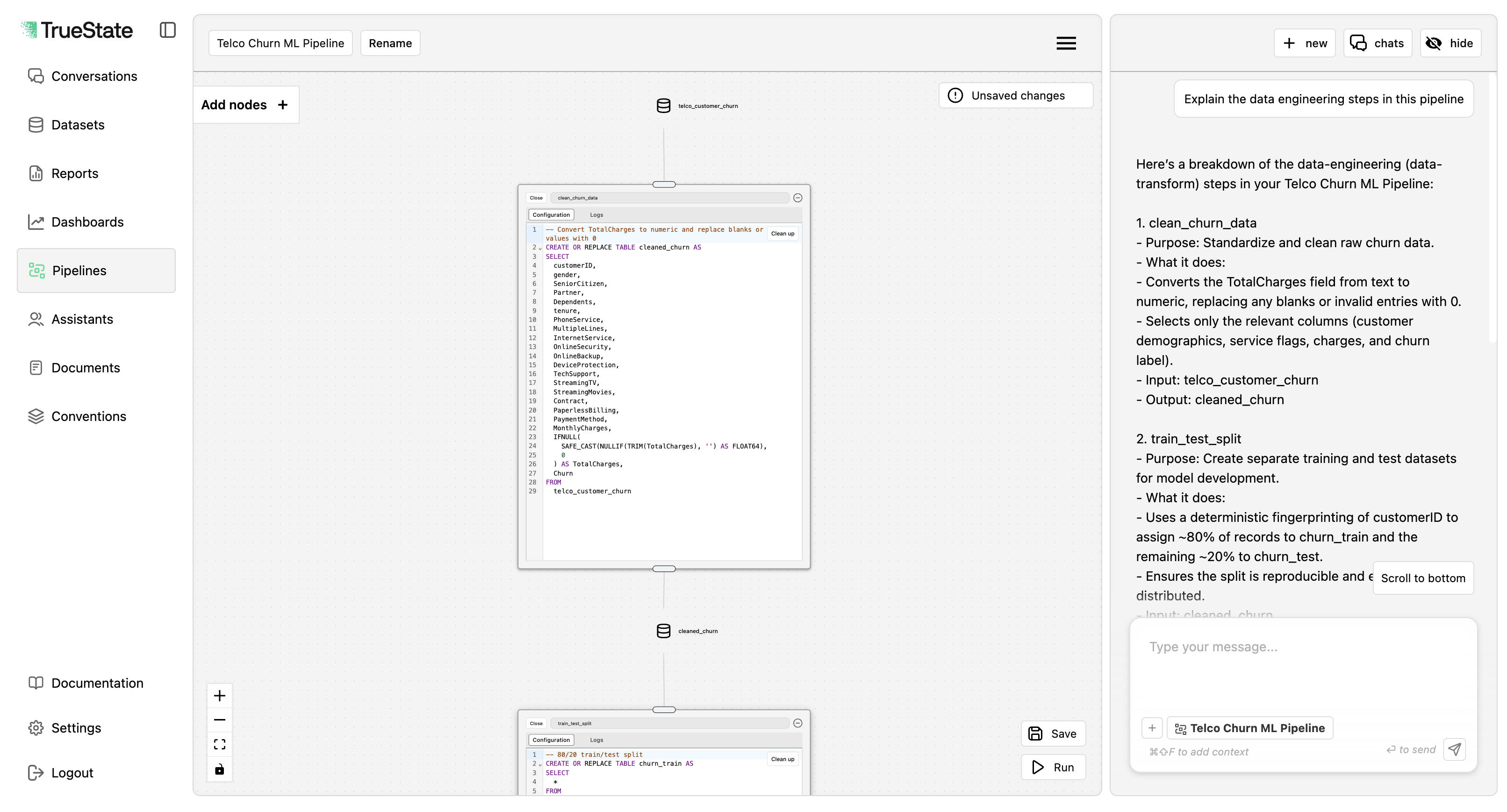
When your team has an analytics agent capable of data engineering, you just need to describe what clean data should look like, and the agent writes the transformation logic, tests it, and fixes issues when source data changes. Agents handle the entire pipeline lifecycle: building transformations based on business requirements, debugging failures automatically, and adapting when upstream schemas change.
What traditionally took a data engineer days now happens in minutes.
6. Accelerated Advanced Analytics
Advanced analytics capabilities like forecasting, churn prediction, and customer segmentation have historically required specialised data science teams and months of development. Most companies can't justify the investment, so they make decisions based on historical reporting instead of predictive insights.
The gap between "what happened" and "what will happen" remains wide for teams without dedicated data science resources.
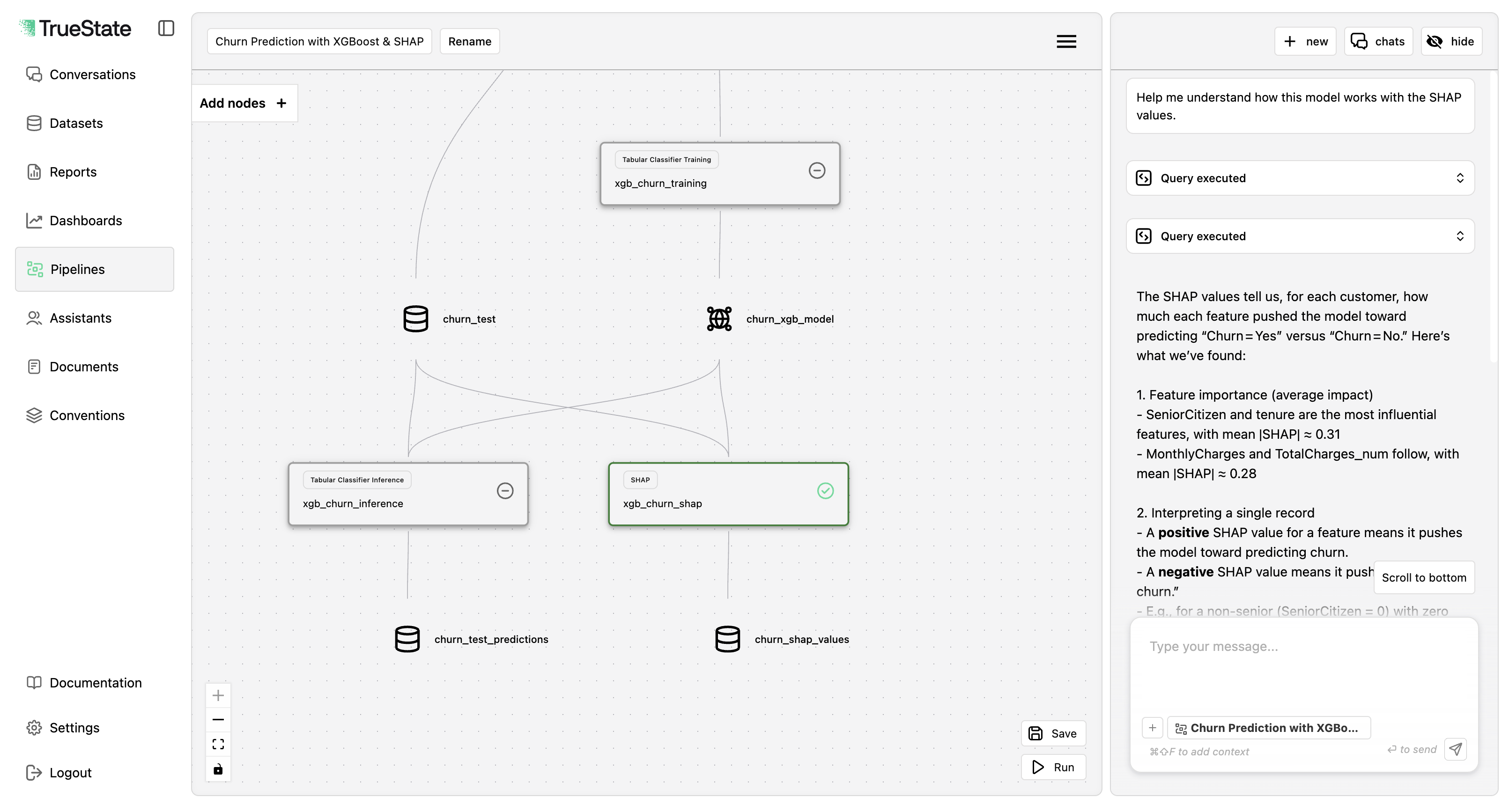
With agentic analytics, complex forecasting and causal analysis that previously required PhDs are now accessible through conversational requests. "Forecast next quarter's revenue by product line" or "What factors drive customer churn?" trigger the agent to build detailed modelling pipelines in minutes.
Wrap up
Agentic analytics represents a fundamental shift: from analytics teams as services desks to valued, strategic partners.
From conversational analytics to building advanced data science solutions, agentic analytics is transformational for teams making the switch. Early adopters, like our customers, are discovering a whole new velocity of analytics and are solving high-impact problems they otherwise would never have time to think about.
Ready to see what agentic analytics looks like? Request a demo to see how TrueState brings all six capabilities together in a single platform.